
'We've really got an opportunity': How a San Francisco area company aims to change the lives of epilepsy patients
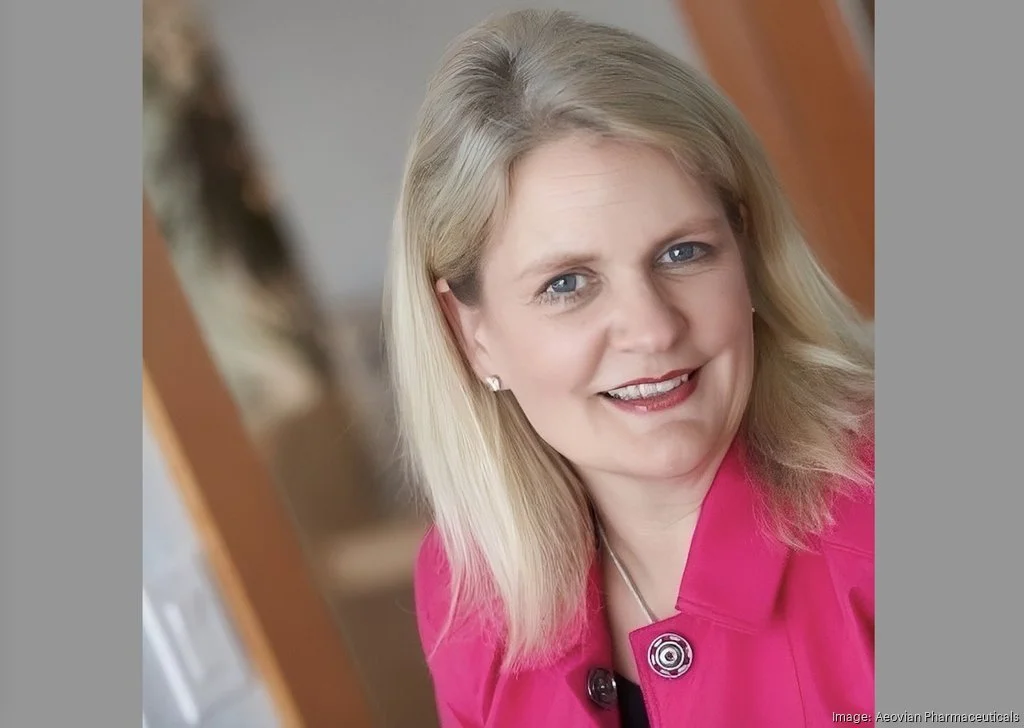
Allison Hulme is the president and CEO of Aeovian Pharmaceuticals.
By Ron Leuty – Senior Reporter, San Francisco Business Times
Jan 6, 2026
Story Highlights
What’s This?
Aeovian Pharmaceuticals raised $50 million for a tuberous sclerosis epilepsy treatment.
The company has raised $137 million total for Phase II trials.
AV-078 targets mTORC1 only, avoiding side effects of existing drugs.
For years, the small crew with Aeovian Pharmaceuticals Inc. has worked to shape a Goldilocks-like drug for a subset of epilepsy patients: not big on side effects and not small on efficacy, but just right.
Now the nine-person company founded in the North Bay, set up in the East Bay and working out of offices on the Peninsula and elsewhere has raised a $50 million round that CEO Allison Hulme said will carry Aeovian through a planned midstage clinical trial.
If Aeovian's daily oral drug works, the eight-year-old company's drug-development journey could be a fairy tale come true for patients with tuberous sclerosis complex, or TSC. The rare genetic disorder that can cause noncancerous tumors to grow in the brain, kidney and heart as well as on the skin and launch daily seizures that often can't be controlled today with antiepileptic medications.
If successful in treating TSC-related refractory epilepsy — seizures that can't otherwise be controlled — Aeovian hopes to extend its drug to hit other manifestations of TSC. With that, Hulme said, Aeovian's drug, AV-078, could become TSC patients' drug of choice.
"We've really got an opportunity," Hulme said.
The company's fresh Series B round was co-led by new investors Luma Group and CTI Life Sciences Fund. Other investors include Foresite Capital, SymBiosis, law firm Wilson Sonsini and patient advocacy group TSC Alliance's endowment fund as well as existing investors Apollo Health Ventures, the Saudi investment firm Hevolution Foundation, Sofinnova Investments and venBio.
Hevolution led Aeovian's previous $50 million round last year.
In all, Aeovian has now raised $137 million. The company now has enough cash to finish up the Phase II trial and into 2028.
"We had a compelling story that the investors could respond to," Hulme said. "And the hypothesis was holding up once we hit the clinic."
Aeovian was launched out of the Novato-based Buck Institute for Research on Aging, where it was founded by Stelios Tzannis, along with scientific advisor David Lowe and Apollo Health's Nils Regge. Tzannis had been Buck's director of clinical sciences.
The company calls Berkeley its business address but uses the Menlo Park offices of one of its investors, Hulme said. Meanwhile, CFO Micah Zajic is based in New York and Chief Medical Officer Dr. Davis Ryman in Chicago.
The virtual organization hasn't stopped progress on Aeovian's drug and the company's goal to develop small molecules to bring cellular metabolism back under control.
AV-078 is aimed at inhibiting mTORC1 — mechanistic target of rapamycin complex 1 — a protein complex acts as a sort of gatekeeper for metabolism, cell growth and more. The problem is, a genetic mutation in TSC patients flips mTORC1's switch to hyperactive signaling.
Hyperactivated mTORC1 also results in TSC patients' tumors, Hulme said.
But one of the most common markers of TSC is epilepsy, with 90% of patients developing seizures in infancy or eary childhood. Some of those patients can experience as many as nine seizures a week, Hulme said.
The frequency of the seizures in infancy and early childhood can lead TSC patients to develop cognitive problems and neuropsychiatric issues that can put them on the autism spectrum.
While some TSC patients with epilepsy can take antiseizure medications, those drugs don't work in about two-thirds of patients because of the hyperactive signaling, Hulme said.
What's more, the oral generic drug everolimus hits mTORC1 but also mTORC2, which is regulated by an entirely different mechanism. That can set off toxic side effects that force caregivers to reduce the everolimus dose or institute "drug holidays" that tamp down the efficacy of the drug.
Aeovian's drug targets mTORC1 only, Hulme said.
"Our whole goal here is to inhibit only the mTORC1 complex to make it safer and better tolerated and with no dose reductions or holidays, so there's better efficacy," she said.