
Maegan’s new beginning: After years of severe epilepsy, Citrus County woman is building independence — and rediscovering life
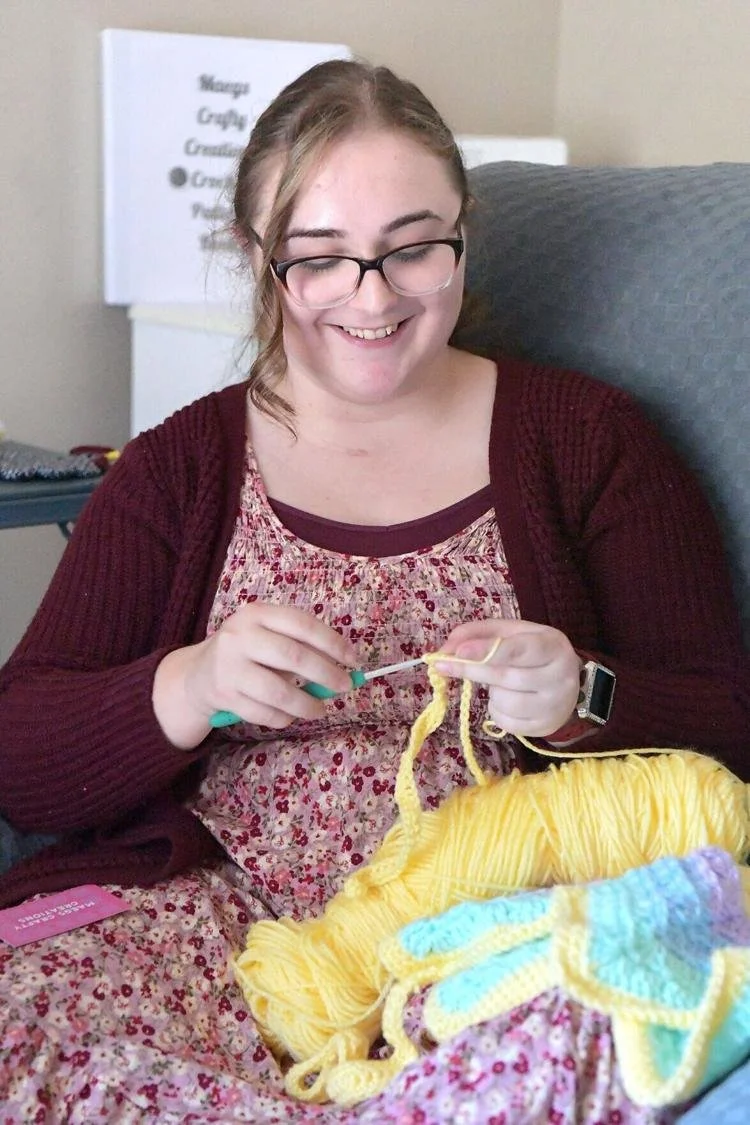
Magean Haganey quietly crochets from her Inverness home. The 21-year-old has lived with a debilitating condition that she and her family have battled since she was a child. Maegan is now working, driving and thriving.
Editor’s note: Maegan Haganey was born with PCDH19, a rare form of epilepsy characterized by cluster seizures. She had her first seizure at 13 months. The Chronicle has been following Maegan since she was 9.
By 17, years of constant, violent seizures — sometimes as many as 80 in a 12-hour period — had led to memory loss and declining cognitive function.
Her mother once described her condition as “someone with dementia plus teenage hormones.”
Then, two weeks before her 18th birthday, the seizures stopped.
Today, Maegan is 21 — and still seizure-free.
The family of Maegan Haganey believes in miracles — even the ones that take years.
“I almost have my sister back,” said Nicole Kindell. “She’s a completely different person, but it's better than the alternative, always zoned out.”
Today, Maegan has her driver’s license and is trying out jobs at local businesses through EmployU, a vocational agency for people with disabilities. She also attends the ESE transition academy at Withlacoochee Technical College, where she’s learning life skills — and hopes to start her own small business selling crochet tote bags.
“I’m doing good,” Maegan said.
Even so, in many ways, she is starting life over.
At the WTC Transition Academy, Maegan gets hands-on, real-world learning experiences.
“I’m learning how to grow up,” she said. “When I was 9, when I really started having the seizures really bad, it hit my brain really hard.
“I am mentally at third grade level in math and fourth grade in English.”
Because of memory loss, she had to start from scratch — “This is a tree; this is a giraffe.”
A grade-schooler in an adult body.
She doesn’t remember her seizures. She doesn’t remember family vacations.
She remembers her trampoline and her dog, Jake. But she doesn’t remember being a kid.
“My disabilities are invisible,” she said. “Understanding is still sometimes difficult. Like, when people talk really fast to me, I don't really understand what they’re talking about.”
Part of her education now is learning how to handle challenging situations on her own.
At a local restaurant, Maegan trained in kitchen work, including washing dishes.
It was hot and steamy, and loud music played in the background — conditions that affected her body temperature.
“It was very upsetting … the second day I went, I had a really massive hot flash from all that hot water,” she said. “I told my parents and they said I'm going to have to tell (the restaurant owner) that I can't just be doing the dishes because I could not tolerate my temperature.
“It was not easy when it came to that little difficulty,” she said.
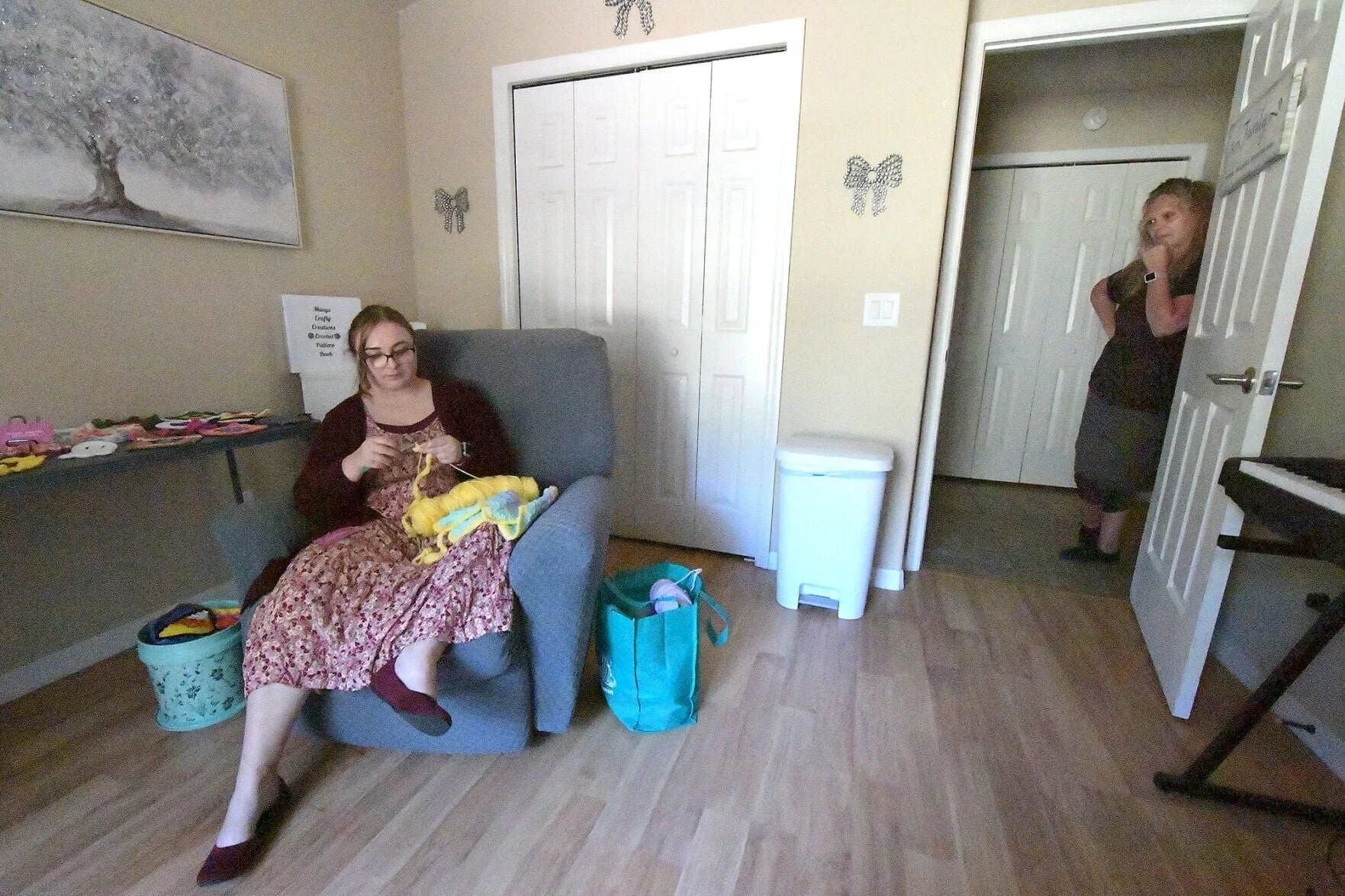
April Haganey, right, the mother of Maegan Haganey, watches her daughter crochet.
The goal is independence
For much of her life, Maegan slept with her parents. Her seizures almost always happened at night and required immediate intervention with medications and life-saving measures to keep her from choking or injuring herself.
No one in the Haganey household got much sleep.
When she was a senior at Citrus High School and had gone about 18 months without a seizure, Maegan began sleeping in her own room.
“I still don't sleep a lot,” said her mother, April Haganey. “We have a baby monitor in our room, and then we also keep her on a pulse monitor, like you would wear in the hospital. She puts it on her toe and wears a sock over it.
“We have it set that if it goes off when the heart rate gets to 130, then we know that there's something going on.”
April said she still lives “on call” at all times.
“We’re at a place where we never know when a seizure is going to happen. We still have to prepare,” she said. “Just because she's four years and almost four months seizure-free, we still have to prepare as if it's going to happen.”
When Maegan turned 18, her parents became her guardian advocates, giving them authority over her medical care, living arrangements and finances.
The goal is independence — whatever that may look like for Maegan.
“I've even got a book that if something happens to my husband and I, Nicole is obviously the one that will be in charge unless she decides she doesn't want to — she can give up that right,” April said. “But somebody — until, unless God completely heals her and everything is better — somebody will have to always be there to help her.”
One of Maegan’s goals is to start her own business making and selling crocheted items.
She began about three years ago after watching a how-to video on YouTube.
“She’s really gotten into crocheting and doing amazing crafts,” April said. “She can watch a YouTube video and recreate it … that's her wheelhouse.”
Maegan also found a video of a woman explaining how she started a home-based crochet business.
“I thought I could do that,” she said. “My dad watched the video and he said there was some good information. So, I might do that.”
‘We celebrate the wins, but …’
The 13th of every month since Dec. 13, 2021, marks another month that Maegan is seizure-free.
“We celebrate the wins,” April said. “But we’re honest about the rest.”
Both April and her husband, Jimmy, now deal with ongoing health issues — the years of seizures took a toll on the entire family.
“I’m stuck in ‘fight or flight’ mode from years of constant stress. My body never had time to process,” April said. “I’m working on that.
“The thing is, we remember it all — but she doesn’t.”
Maegan’s sister often had to take a back seat. Even though she understands why, it’s something she continues to work through in therapy.
“We’re all trying to navigate a new life,” she said. “It’s hard. She’s still unpredictable. But it’s nice that she's thriving and doing good in school.
“It’s good to have her back, even though it's not the same. It won't be the same.”