
‘An emotional rollercoaster’: Little Mason’s seizures are taking a toll
By Alexandra Phelps FIU Lee Caplin School of Journalism & Media
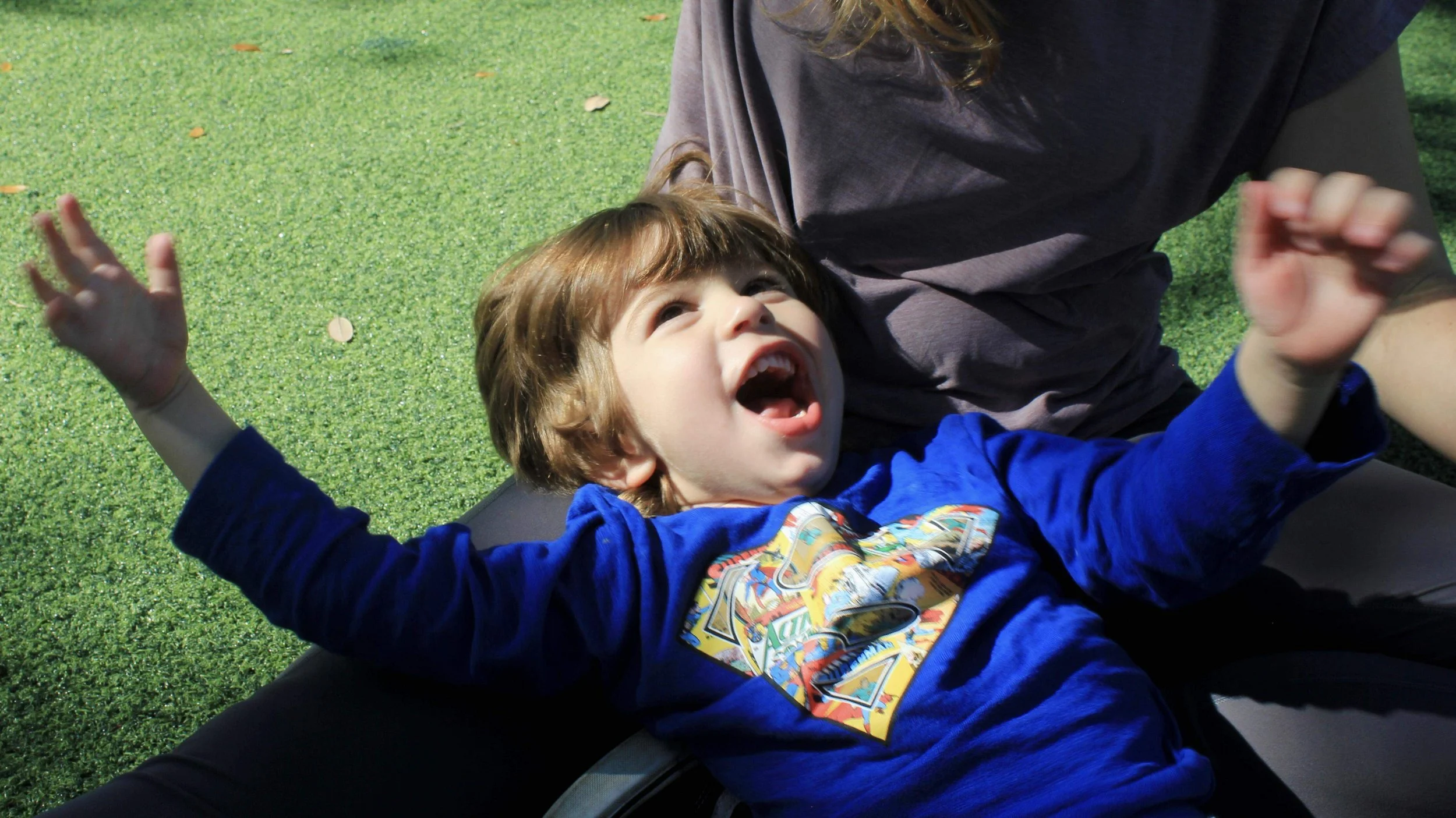
Mason Rodriguez, 3, smiles up at his mom as they play at Cypress Park in Coral Springs on Nov. 1st, 2025. Alexandra Phelps/FIU
Mason Rodriguez had his first seizure when he was 2 1/2 months old. It was May 7, 2022, the day before Mother’s Day. Mason had just been nursed, and his father was the first to notice something wasn’t right. His child’s gaze had run off to the side, his arms had become stiff, and he was unresponsive.
Now at age 3, Mason has been diagnosed with epilepsy — along with chromosome abnormality, anemia, developmental delay, and hypotonia, or low muscle tone. He’s nonverbal, unable to walk independently, and has developed vision difficulties. Many of his conditions are connected to and worsen with his seizures, which mainly occur at night. “He’ll have a seizure for maybe a few minutes, but then after he comes out of it, it’ll be an hour, two hours . . . before I can get him to go back to sleep,” Mason’s mom, Elizabeth Rodriguez, said. “He’s just inconsolable, crying … scared.”
Mason physically recovers eventually and doctors are optimistic long-term, but the ordeal impacts the entire family. For Mason’s brother, 9-year-old Matthias, sudden ambulance arrivals to their Coral Springs home and parents’ prolonged stays at the hospital have affected him, leaving him with less support at his baseball games and less attention than he needs. “For me and his dad, it’s just an emotional rollercoaster,” Rodriguez, 32, added. “Constantly not knowing what’s going to happen…how long it’s going to happen for, if it’s going to be an ER visit that happens, lack of sleep, appointments galore.”
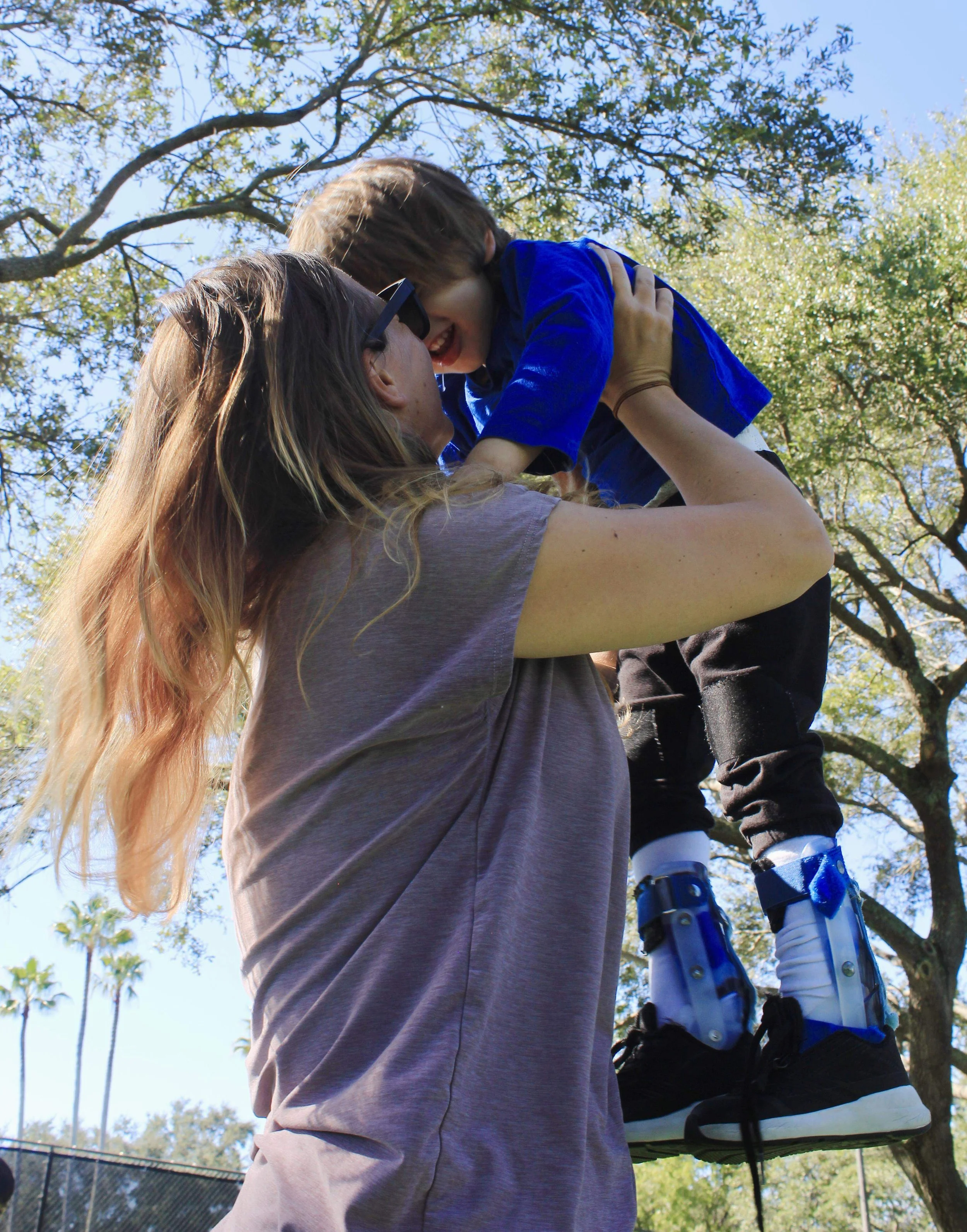
Elizabeth Rodriguez and her son Mason play in Cypress Park in Coral Springs. Alexandra Phelps/FIU
At Arc Broward — an organization that offers support and schooling for people with disabilities — Mason’s teacher, Licebuth Seijas, tries to lessen that burden during school days, accompanying the 3-year-old to his therapies and working one-on-one with him. “In the beginning, he can’t even keep the eye contact for a second — he avoids the eye contact,” Seijas said. “But now, you talk to him, at least you can have something like two seconds, three seconds [of eye contact]. It’s a huge step in our work, in what we’re doing here.” While parents Elizabeth and Manuel Rodriguez are at work, it’s paternal grandmother, Mary Rodriguez, 62 , who takes care of the kids. She picks Mason up from Arc every day at noon, giving the boy a short school day to avoid him napping and having a seizure away from home. “I can’t help but cry every damn time,” Mary Rodriguez said, lifting her sunglasses to wipe tears away. With Mason’s circumstances, she added that “you have hopes for your children, and you see that maybe he might not reach that, but that doesn’t mean he’s not worthy. He’s worthy of every opportunity.”
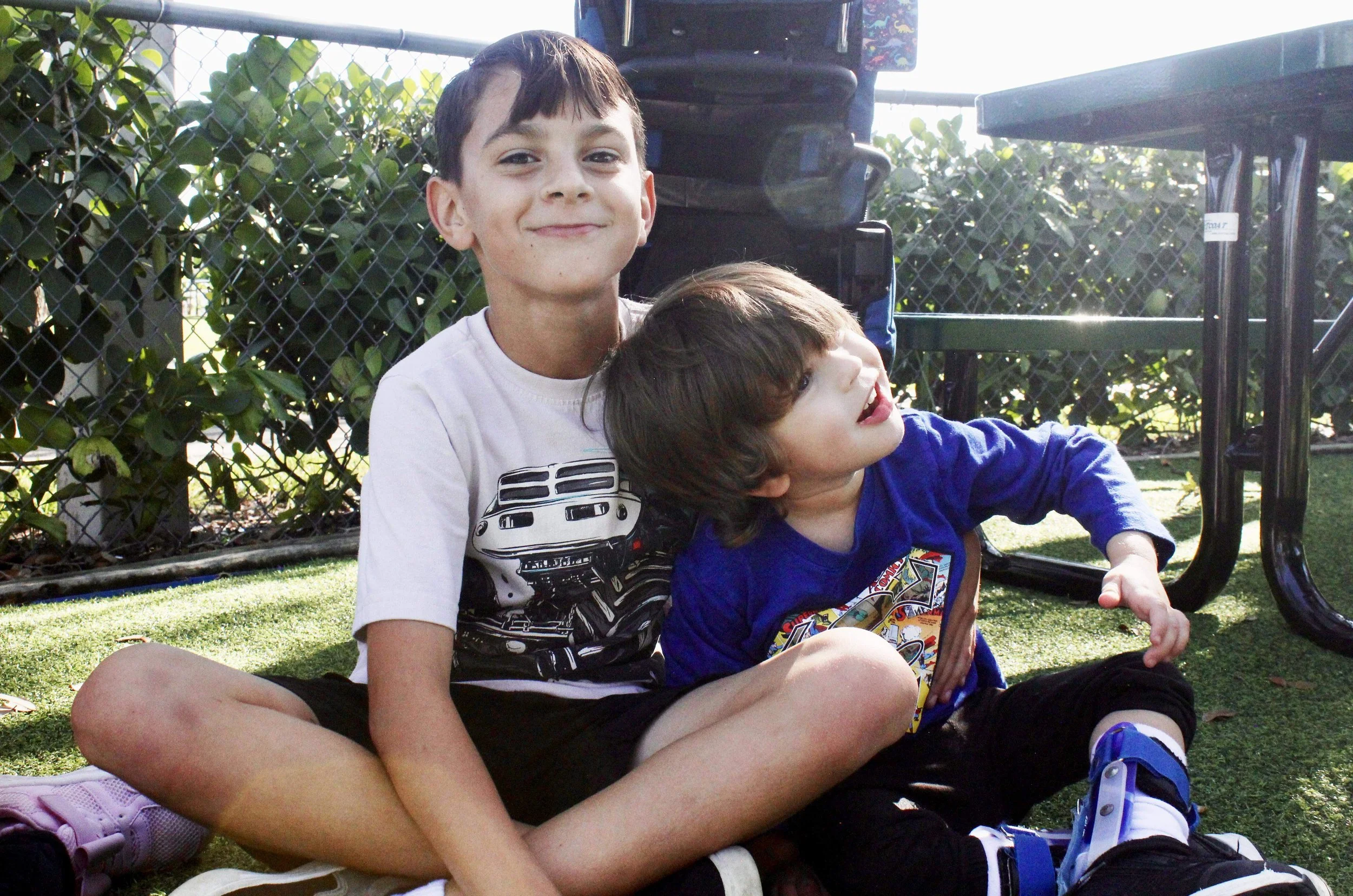
Nine-year-old Matthias Rodriguez (left) puts his arm around his brother Mason at Cypress Park playground in Coral Springs. Alexandra Phelps/FIU
The staff at Arc Broward nominated Mason for the Miami Herald/el Nuevo Herald Wish Book, a holiday fundraising drive that shares the stories of South Floridians in need and connects them with resources and assistance. For the Rodriguez family, their wish is for a Cubby Bed — a smart bed capable of monitoring Mason and alerting his parents to signs of seizure while keeping him safe at night. Currently, Mason sleeps in a crib. For his security, a canopy covers its top, and cut-up pool noodles soften the hard slats. But the 3-year-old is growing, and his family needs more space to help him. The Cubby Bed “would be a huge blessing,” his grandmother said. “Not only for his safety… You can actually go in with him… [when] his nights are so restless.” “It has a camera in it, it’s bigger — I can lie down with him and comfort him that way,” his mother added. “All around, it’s something he can grow with.”
HOW TO HELP
To help this Wish Book nominee and more than 150 other families and individuals who are in need this year:
▪ To donate, use the coupon found in the newspaper or pay securely online through www.MiamiHerald.com/wishbook
▪ For more information, call 305-376-2906 or email Wishbook@MiamiHerald.com
▪ The most requested items are often laptops and tablets for school, furniture, and accessible vans
▪ Read all Wish Book stories on www.MiamiHerald.com/wishbook
This story is the product of a partnership between the Miami Herald and the Lee Caplin School of Journalism & Media at Florida International University.
Source: https://www.miamiherald.com/living/wish-book/article312936323.html